
2026 Midterms State GuideNorth Carolina
Hold on to your Cheerwine and barbecue.
Polls are closed
Polls are closed in North Carolina, and results aren’t finalized yet.
Ballots are still being counted, close races can take days to call, and no result is official until it’s certified.
A prayer for North Carolina
Lord, we come before You on behalf of North Carolina, a state of mountains and piedmont and coast, of college towns and mill towns and military communities, of diverse people all held by the three-person God. May North Carolinians remember that they are voting for their state and their neighbors, not for a team in a national game.
Read the whole prayerUpdated
Hi! It’s me, Shadrach. Apparently, I’m your civic guide today. If you’ve been complaining about how things are going (and I’ve heard you... the walls are thin), this guide will help you feel informed and able to vote in this year’s midterms. Now, hold on to your Cheerwine and barbecue, and let’s get into it.

North Carolina at a glance
North Carolina votes on Tuesday, Nov. 3, 2026, for U.S. Senate, all 14 U.S. House seats and three statewide ballot measures.
- Election Day
- Tuesday, Nov. 3, 2026
- Voter registration
- Oct. 9: Voter registration deadline (5 p.m.)
- Early voting
- Oct. 15: In-person early voting begins; same-day registration available
- U.S. Senate
- 4 candidates
- U.S. House
- 14 seats
- Statewide ballot measures
- 3
What happens next
The counting continues
Election-night numbers are unofficial. Mail, provisional, and military ballots are still being counted, so close races can take days to call.
Officials double-check the count
Local election officials review the ballots and the tallies (the canvass). A very close race can go to a recount.
North Carolina certifies the results
Results become official once North Carolina certifies them, usually a few weeks after Election Day.
Winners take office
The new Congress takes office in early January. Governors and other state officials take office on dates set by state law, most of them in January too.
Important dates
- Mar. 3Primaries This date has passed.
- Sept. 4Absentee ballots must be available and distributed to military and overseas voters This date has passed.
- Oct. 9Voter registration deadline (5 p.m.) This date has passed.
- Oct. 15In-person early voting begins; same-day registration available This date has passed.
- Oct. 20Absentee ballot request deadline (5 p.m.) This date has passed.
- Oct. 31In-person early voting ends (3 p.m.) This date has passed.
- Nov. 3Election Day and absentee ballot return deadline (7:30 p.m.) This date has passed.
What’s at stake
North Carolina has an open Senate seat, and Democrats see it as their best pickup opportunity. Former Gov. Roy Cooper has led Republican Michael Whatley in polling throughout the race, and the Cook Political Report rates it as leaning Democrat. With Republicans holding a 53-47 Senate majority, a Democratic flip could help decide which party controls the chamber. In a July Catawba-YouGov poll, 72% of North Carolinians said prices were squeezing their wallets and reported cutting back, while 57% said they’re struggling to afford regular expenses. Respondents most often described vehicles as unaffordable, followed by gas, housing, healthcare and insurance, groceries, and energy and utilities.
Who’s on your ballot
Tap a race to see the candidates.
- Get to know ’em
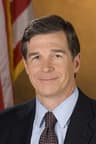 Roy CooperDemocrat
- Get to know ’em
 Michael WhatleyRepublican
- Get to know ’em
 Michael DublinGreen
- Get to know ’em
 Shannon BrayLibertarian
All U.S. House of Representatives seats are up for election every two years. Find your district here.
North Carolina’s unveiling some new
barbecuedistrict boundaries this year, making it one of nine states to feature a new Congressional map in 2026.- Shadrach’s big picture
North Carolinians will elect 14 candidates to represent them in the U.S. House. Under the new map, Republicans are expected to hold eleven of those seats (up from ten under the old map).
- Open seats
One. Incumbent Rep. Chuck Edwards (R) withdrew from NC-11.
- Redistricting effect
Rep. Don Davis’s (D-1) district had some voters carved out, flipping it from a toss-up seat to more Republican-leaning. Davis’s home was technically pushed into NC-3, but he chose to continue to run under his former seat rather than face incumbent Rep. Greg Murphy (R-3). The other twelve districts were unaffected.
- Competitive districts
Two districts, NC-1 and NC-11, are considered shaky Republican (leaning but not guaranteed). NC-2, NC-4, and NC-12 are solidly Democratic and the rest are solidly Republican. Candidates in both parties filed to run in every district, so no district is guaranteed to either party.
Statewide ballot measures
3 to read before you go. Tap one to open it.
North Carolina's constitution already requires photo ID to vote in person, and state law already requires it for mail-in ballots. This amendment would put the photo ID requirement for every voting method, including absentee by mail, into the constitution.
Voting yessupports writing photo ID for every voting method, including absentee by mail, into the constitutionVoting noopposes the amendment, keeping the constitution’s photo ID rule for in-person voting and leaving the mail-in ID requirement in state law, where the legislature can change itCurrently, the North Carolina constitution caps the income tax rate at 7%. This would lower that cap to 3.5%. It wouldn't lower taxes on its own: the rate (currently 3.99%) is already scheduled to drop to 3.49% in 2027, when the cap would take effect. It would prevent future increases above 3.5%.
Voting yessupports lowering the constitution’s cap on the income tax rate from 7% to 3.5% starting in 2027, which blocks future increases above 3.5% but does not cut taxes on its ownVoting noopposes this constitutional amendment, keeping the 7% cap, so a future legislature could raise the rate above 3.5%North Carolina has no state property tax. Counties, cities, and towns set their own rates, and there's currently no statewide limit on how much their total property tax collections can grow from year to year. This amendment would require the state legislature to pass laws limiting how much total property tax collections may increase.
Voting yessupports requiring the legislature to pass laws limiting how much counties, cities, and towns can grow their total property tax collections each yearVoting noopposes the amendment, leaving local governments with no statewide limit on how fast their property tax collections can grow
Also on the ballot
Other races North Carolina voters will decide.
- State House
- State Senate
- State Supreme Court
- Intermediate appellate courts
- School boards
- Municipal government
- Local ballot measures
Whose job is it?
Ten things government does. Tap the office that does each one.
Whose job is it to…
1 of 10
Declare a state of emergency after a hurricane or flood?
Pass it on
Know someone voting in North Carolina?
Send them the guide. It takes one tap, and it saves them an evening of arguing in a group chat.
From the newsroom
How TPO has covered North Carolina this cycle. Tap one to read it here.
A prayer for North Carolina
Lord, we come before You on behalf of North Carolina, a state of mountains and piedmont and coast, of college towns and mill towns and military communities, of diverse people all held by the three-person God. May North Carolinians remember that they are voting for their state and their neighbors, not for a team in a national game.
We lift up these candidates who represent different visions for what North Carolina and the country need. Shape them into the kind of leaders who put people above politics. And whoever North Carolinians choose, may that person serve with honor and care for every corner of the state.
For North Carolinians who are weary, anxious, or uncertain what to think, grant them peace that doesn't depend on a poll or a prediction. Your kingdom comes not by Senate seat but by Your Spirit. Help them live well in the present, vote wisely for the future, and trust You with the rest.
Amen.