
Explaining The Voting Rights Act
In this edition of TPO Explains, we break down the Voting Rights Act, explaining why the 1965 law was needed, how the Supreme Court has narrowed it over the years, and why its Section 2 is back in the headlines.
Explaining The Voting Rights Act
What is the Voting Rights Act?
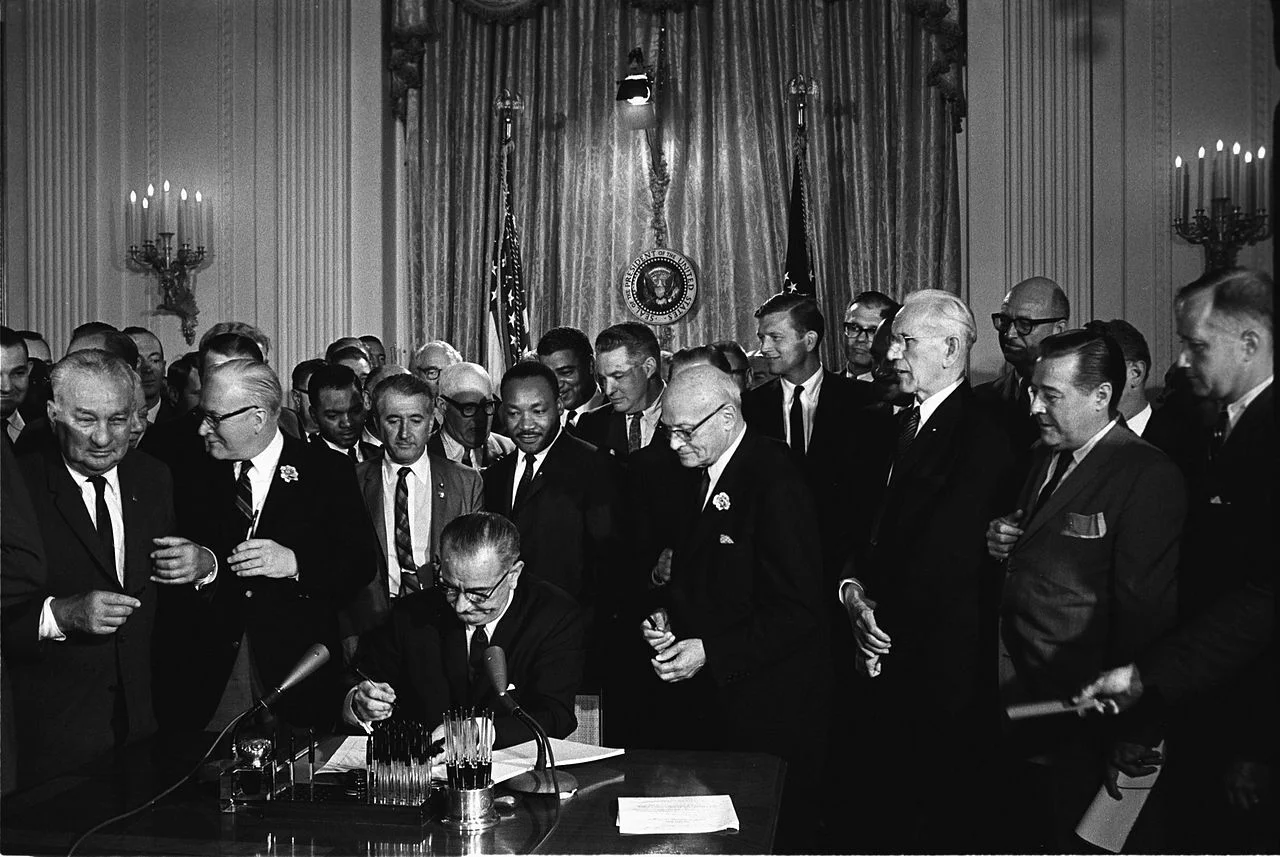
The Voting Rights Act (VRA) prohibits racial discrimination in voting. It was signed into law by President Lyndon B. Johnson in 1965 to enforce the 15th Amendment, which gave everyone the right to vote regardless of race.
If we had the 15th Amendment, why did we need the VRA?
Because the amendment alone wasn’t enough.
The 15th was ratified in 1870… so it existed for almost a century but went largely unenforced. African Americans in the South faced tremendous obstacles to voting (think: literacy tests, poll taxes, or being forced to recite the entire Constitution).
The VRA gave the federal government authority and tools to intervene in unjust state voting practices—an unprecedented move of federal intervention in state governing. And the result was immediate: by the end of 1965, a quarter of a million new Black voters were registered.
The Act has received overwhelming bipartisan support, getting reauthorized four times, while also being highly challenged throughout the years.
Challenged how?
That’s where things get heated.
Sections 4 and 5 of the VRA used to require states with histories of discrimination to get federal approval before changing voting laws. The Supreme Court struck this down in 2013, calling the provision outdated.
Section 2 is the one making headlines right now. It prohibits voting practices that suppress minority voting power, even if the discrimination wasn’t intentional. This comes up most often with redistricting (read last week’s explainer).
A Supreme Court ruling on April 29, 2026, narrowed the interpretation of section 2, saying challengers to a law must prove a “strong inference” of intent to discriminate (not just that a law was discriminatory in its impact) in order to win cases. Racist intent is a much harder thing to prove in court.
Critics argue that, even though the VRA is still law, recent SCOTUS rulings have stripped it of its teeth. Supporters say the rulings were needed to bring it back into alignment with constitutional constraints on federal overreach of states’ rights.
__
ABOVE ALL, LOVE
Culturally hot topics like racial discrimination frequently make people think, speak, and act poorly… including us. We can respect others and represent God better if we are quick to listen, put others before ourselves, and seek peace.
“Do not repay anyone evil for evil. Give careful thought to do what is honorable in everyone’s eyes. If possible, as far as it depends on you, live at peace with everyone.”
Romans 12:17-18 (CSB) (read full passage)