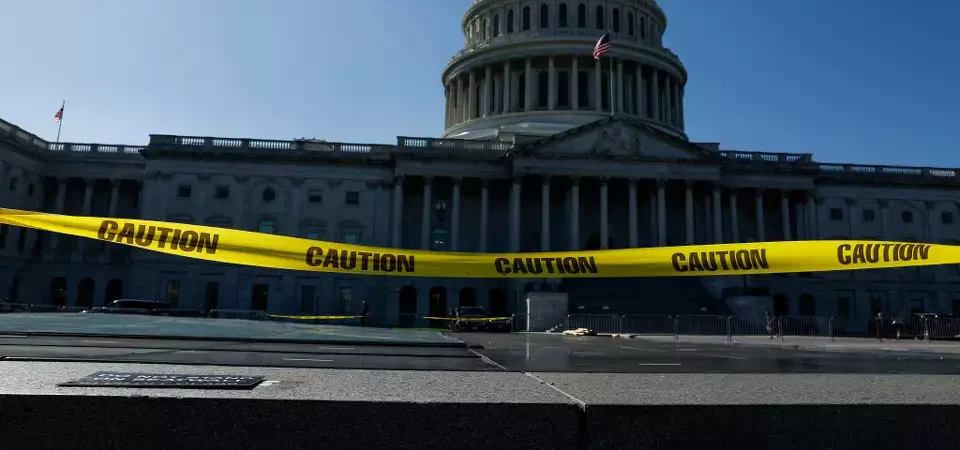
What are Government Shutdowns?
In my house, movie night can’t happen until my kids agree on which movie to watch. And that’s government shutdowns in a nutshell. Any questions?
Maybe just a little more explanation…
Federal agencies cannot spend money without Congress’s approval (thanks to the Antideficiency Act).
To give that approval, the House Appropriations Committee slices the government into 12 sections—like Agriculture, Defense, Homeland Security, and Education—and tasks subcommittees with drafting spending (or “appropriations”) bills. Then, both chambers of Congress vote, and the president slaps on his John Hancock.
But if those bills aren’t passed by October 1 (the start of Uncle Sam’s fiscal year), the government can’t spend money. Cue shutdown.
What happens during a shutdown?
Not much. And that’s the problem.
Essential personnel—like active duty military, federal law enforcement, medical staff in federal hospitals, and air traffic controllers—continue to work without pay, but many federal employees are furloughed (no work, no pay). National Parks close, passport and visa applications stop being processed, SBA loan applications are paused, and all other non-essential work grinds to a halt.
Mail delivery is not affected because the USPS is self-funded, and some offices, like the Patent and Trademark Office, have operating reserves that they can draw upon.
How does a shutdown end?
When Congress successfully passes the 12 appropriations bills or a Continuing Resolution (CR) to provide temporary funding while negotiations continue.
The longest shutdown lasted 35 days in late 2018, sparked by disagreements over border wall funding. About 380,000 employees were put on unpaid leave, and 420,000 worked without pay. Everyone received back pay once the shutdown ended (except for the president, members of Congress, and Supreme Court Justices, who continued to collect paychecks throughout because their pay is guaranteed through other laws).
__
ETERNAL PERSPECTIVE
If our hope is based on political negotiations or economic security, then we live in fear because we could lose everything. But if our hope is rooted in the eternal security provided by Christ, then we can weather any storm.
“My hope is built on nothing less than Jesus’s blood and righteousness… On Christ the solid Rock I stand; all other ground is sinking sand.” – Edward Mote, 1863 (Scriptural basis: Ps 18:2; Matt 7:24; Heb 13:8)